

Lighting, and why you need it
Your Home Doesn't Need More Lights… It Needs Better Lighting.
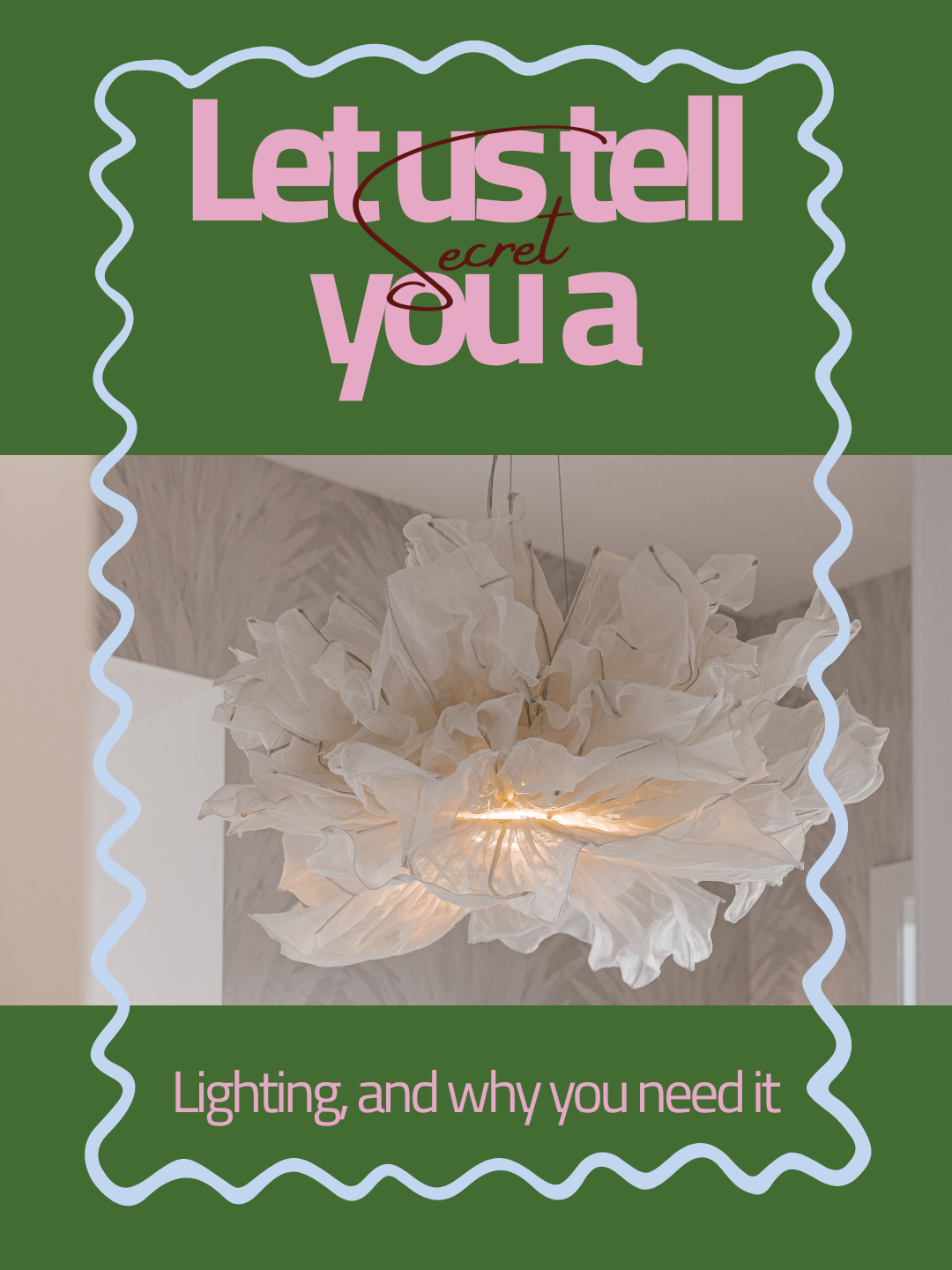
If you've ever walked into a house and thought, "Why does this feel like a hospital?" or "Why does this room somehow feel cosy?"chances are, it wasn't the furniture. It was the lighting.
Lighting is one of the most overlooked parts of a home, yet it has one of the biggest impacts on how a space looks, feels and functions. And no, chucking a few more downlights in the ceiling isn't a lighting plan.
A well-designed home layers different types of lighting, with each one doing a different job. Think of it like building an outfit. You need more than just the jeans.
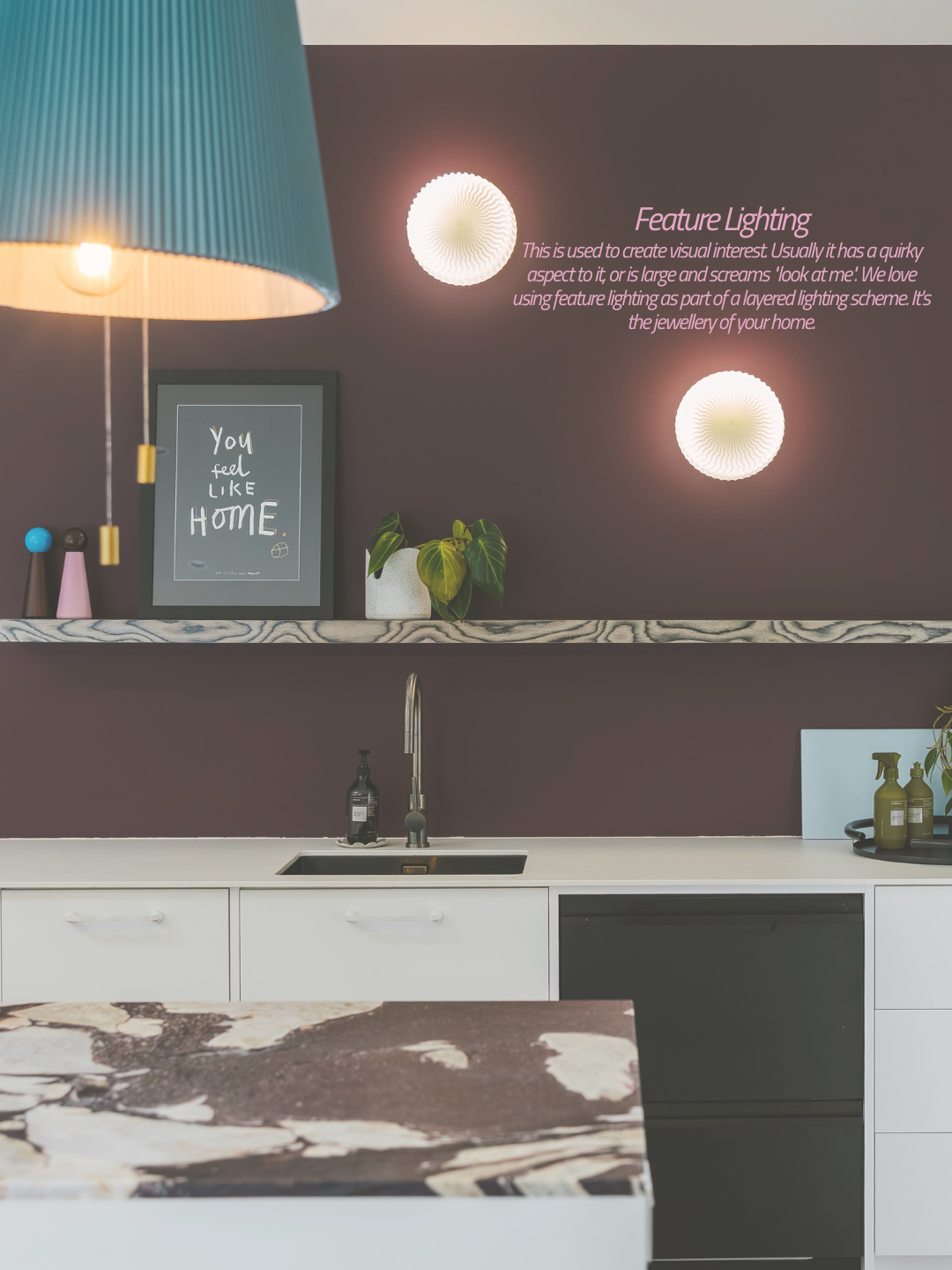
Feature Lighting
Feature lighting is where the fun begins.
This is the lighting that isn't just there to help you see, it's there to make your home look incredible.
A sculptural pendant over the dining table.
LED strips tucked into shelving.
A wall light that doubles as artwork.
A statement chandelier that makes everyone say, "Where did you get that?"
Feature lighting adds personality, creates focal points and gives your home that custom-designed feel. It's the jewellery of your interior. Completely unnecessary... until you see it. Then you can't imagine the room without it.
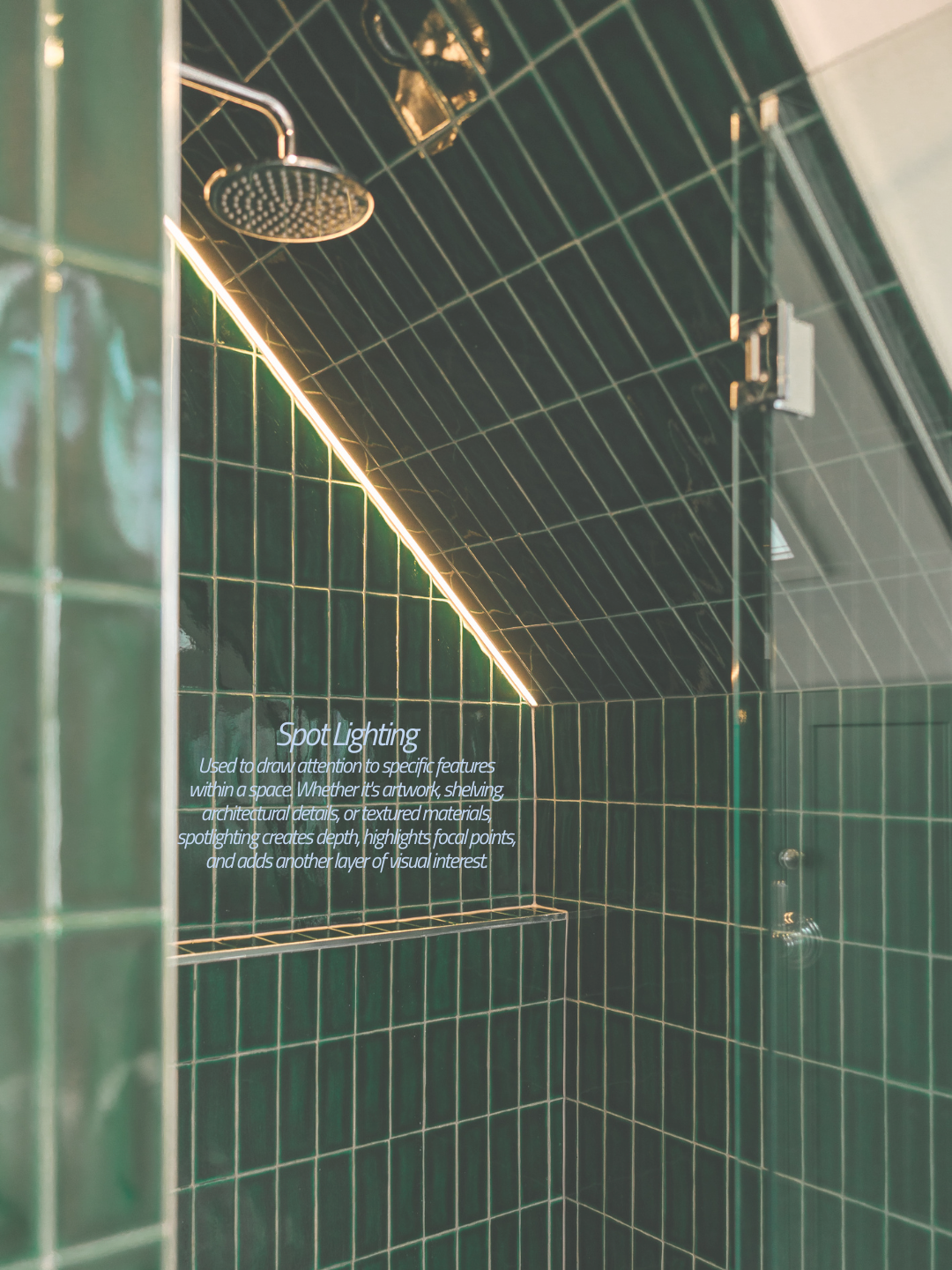
Spot Lighting
Spot lighting is all about directing attention.
Have a textured stone wall you love? A beautiful piece of art? Timber panelling you've spent far too much money on? Spotlight it.
Rather than flooding the whole room with light, spot lighting highlights the things worth looking at. It creates depth, adds contrast and makes a space feel far more considered.
Think of it as giving your favourite design features their own little moment to shine.
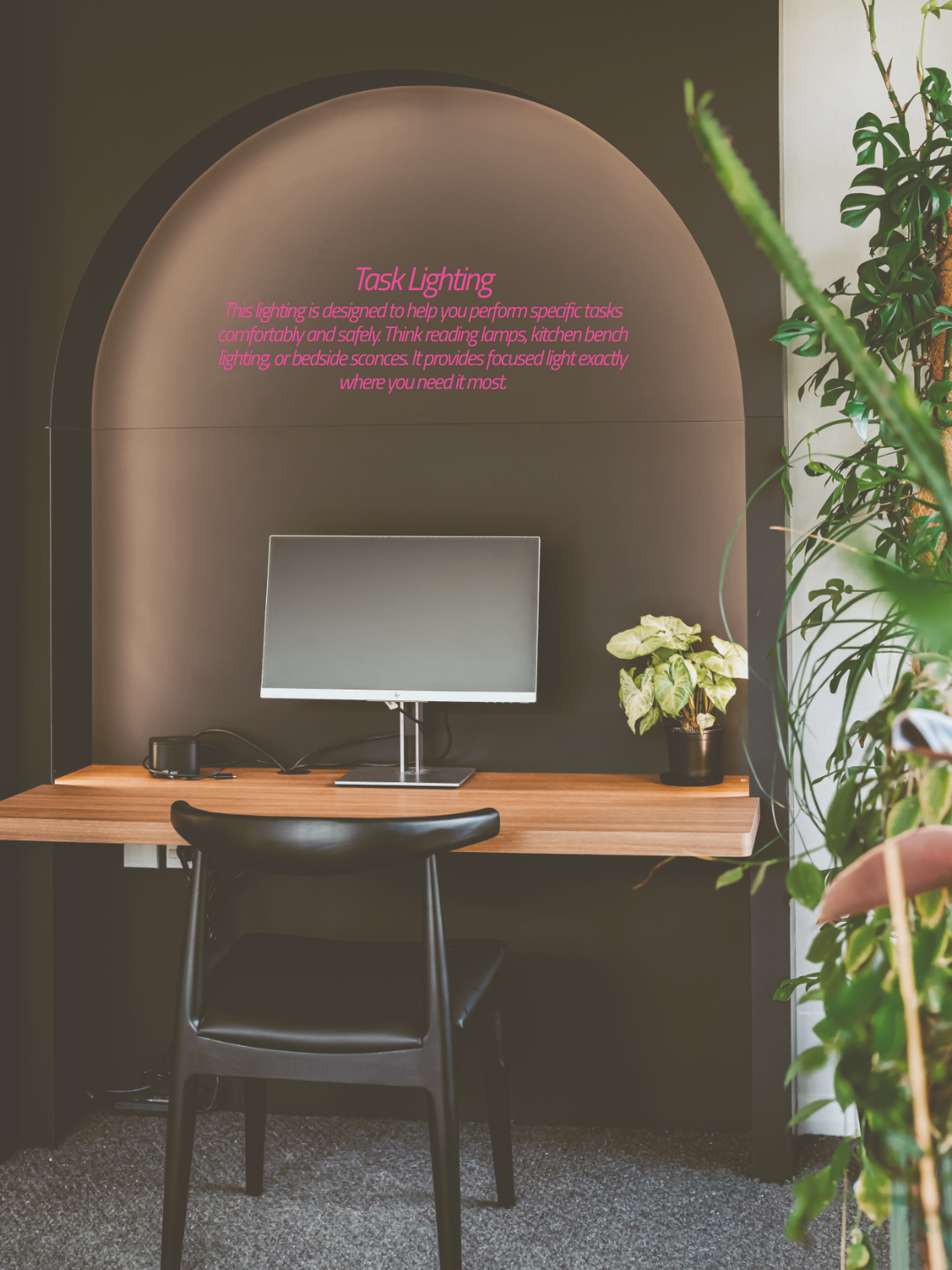
Task Lighting
Task lighting has one very important job: helping you actually do stuff.
Reading in bed.
Chopping onions without losing a finger.
Putting makeup on without discovering you accidentally blended foundation into your hairline halfway through the day.
Task lighting is all about functionality. Think under-cabinet LED strips in the kitchen, bedside wall lights, vanity lighting, desk lamps or pendants over an island bench.
It's practical, but when it's planned well, it also looks pretty good.
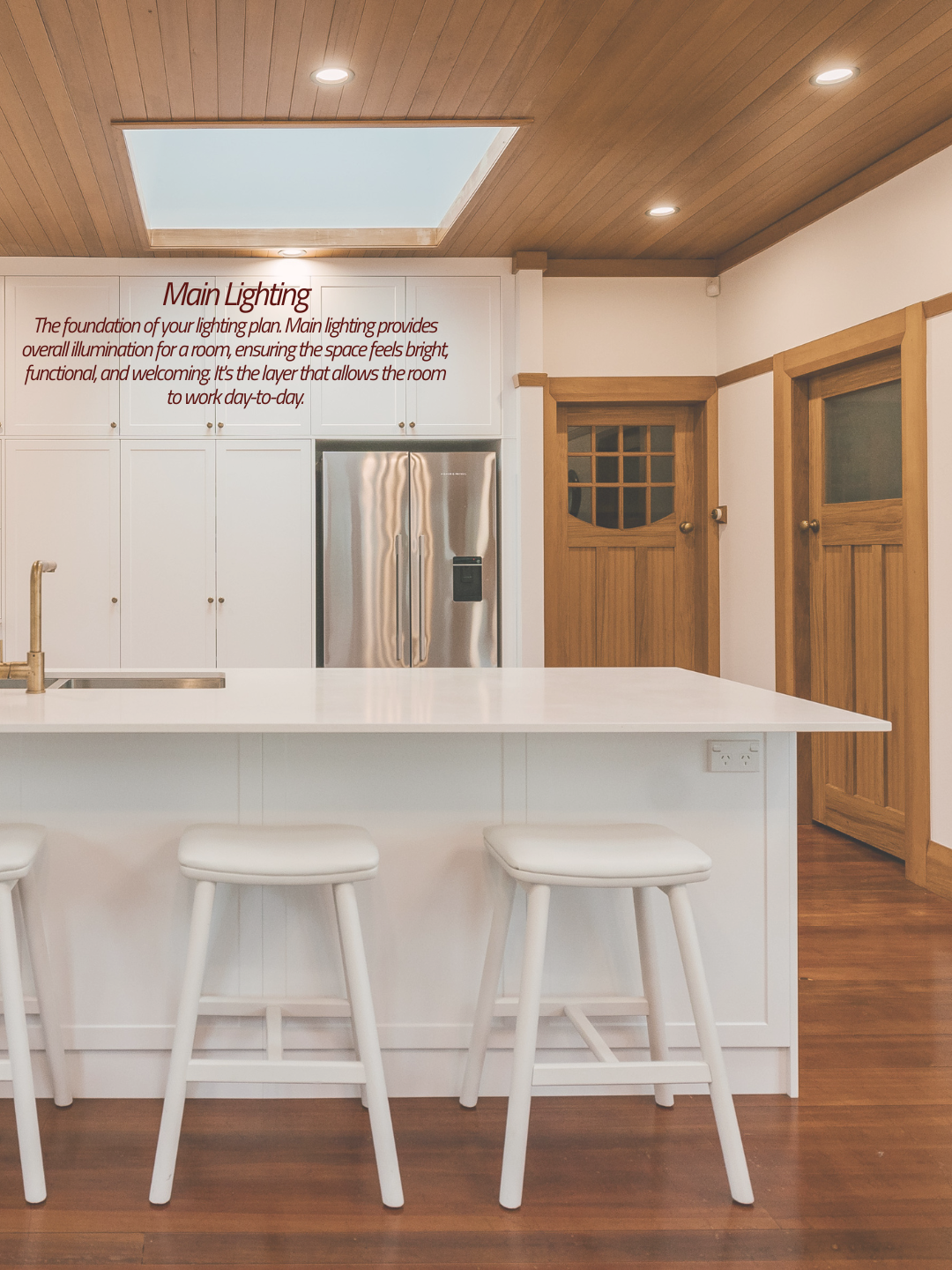
Main Lighting
Let's start with the obvious one.
Main lighting (also called ambient lighting) is the foundation. It's what you switch on when you walk into a room and need to see where you're going without stubbing your toe on the coffee table.
This is usually your downlights, ceiling lights or pendants that provide overall illumination throughout the space.
The mistake? Relying on this alone.
One bright ceiling light blasting directly down on you isn't creating atmosphere; it's giving
The Secret Sauce? Layer Them.
The homes that feel warm, inviting and expensive rarely have brighter lights.
They have smarter lighting.
During the day, you might only need natural light and a few task lights. In the evening, feature lighting creates ambience while spotlights highlight your favourite finishes. Main lighting only gets called in when it actually needs to do the heavy lifting.
That's what makes a home feel balanced instead of flat.
So if you're planning a renovation or new build, don't leave lighting until the electrician asks, "Where do you want your lights?"
By then, it's a bit like planning your wardrobe after you've already left the house.
Lighting isn't just about seeing your home.
It's about feeling it.
