

Design projects evolve as you work through the details together.
You might ask to adjust something in the design, or realise the original idea no longer feels right.
That’s normal.
The key is understanding whether you’re refining the agreed brief or changing the project’s direction.
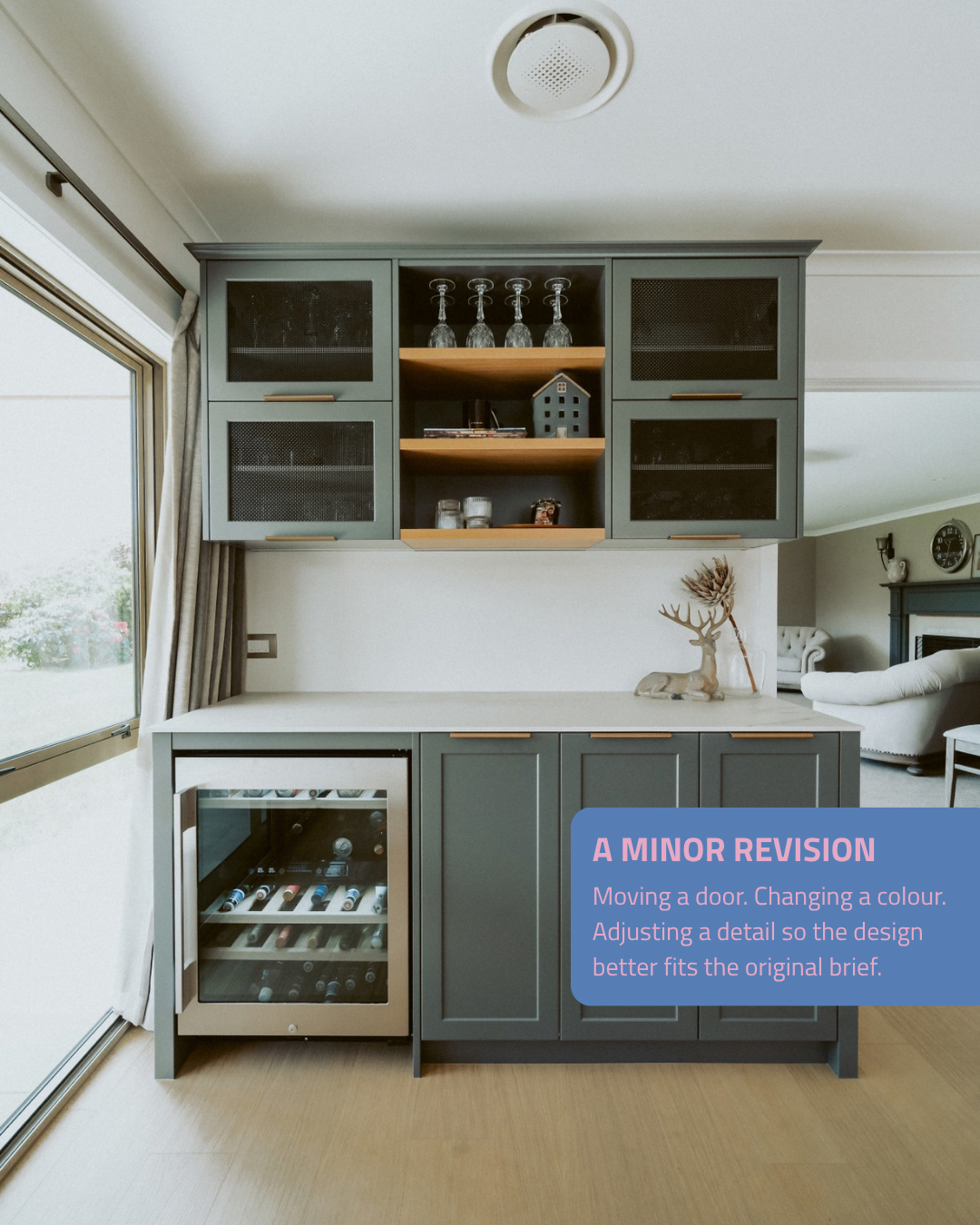
What counts as a minor revision?
A minor revision is a small adjustment that helps the design work better while keeping the original brief intact.
You might ask your designer to move a door, change a colour or tweak a detail so the design suits your needs. The overall idea stays the same. You’re refining the agreed design together.
These changes are often part of the design process. It can be easier to judge a layout or finish once you see it on the page, and your designer can help bring the original vision into focus through small refinements.
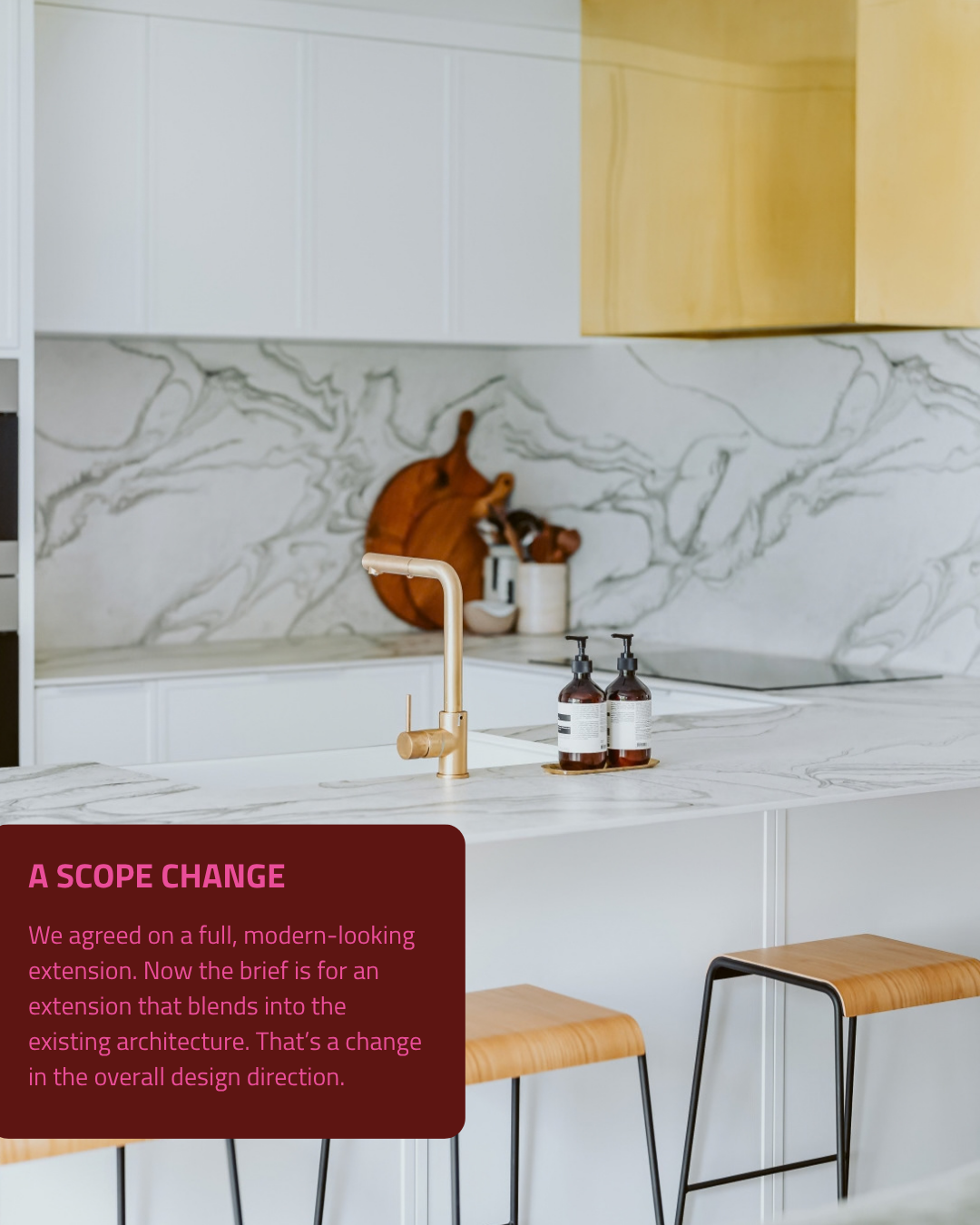
When does a change affect the scope?
A scope change alters what the project is trying to achieve. The design may need to be rethought, which can affect the work involved.
For example, you and your designer may have agreed on a full, modern-looking extension. Later, you decide you’d like it to blend into the existing architecture instead. That’s more than a small adjustment. It changes the overall design direction.
Your designer can explain what this shift means for the work, timeline and fees. It may involve revisiting earlier decisions or developing new design options.
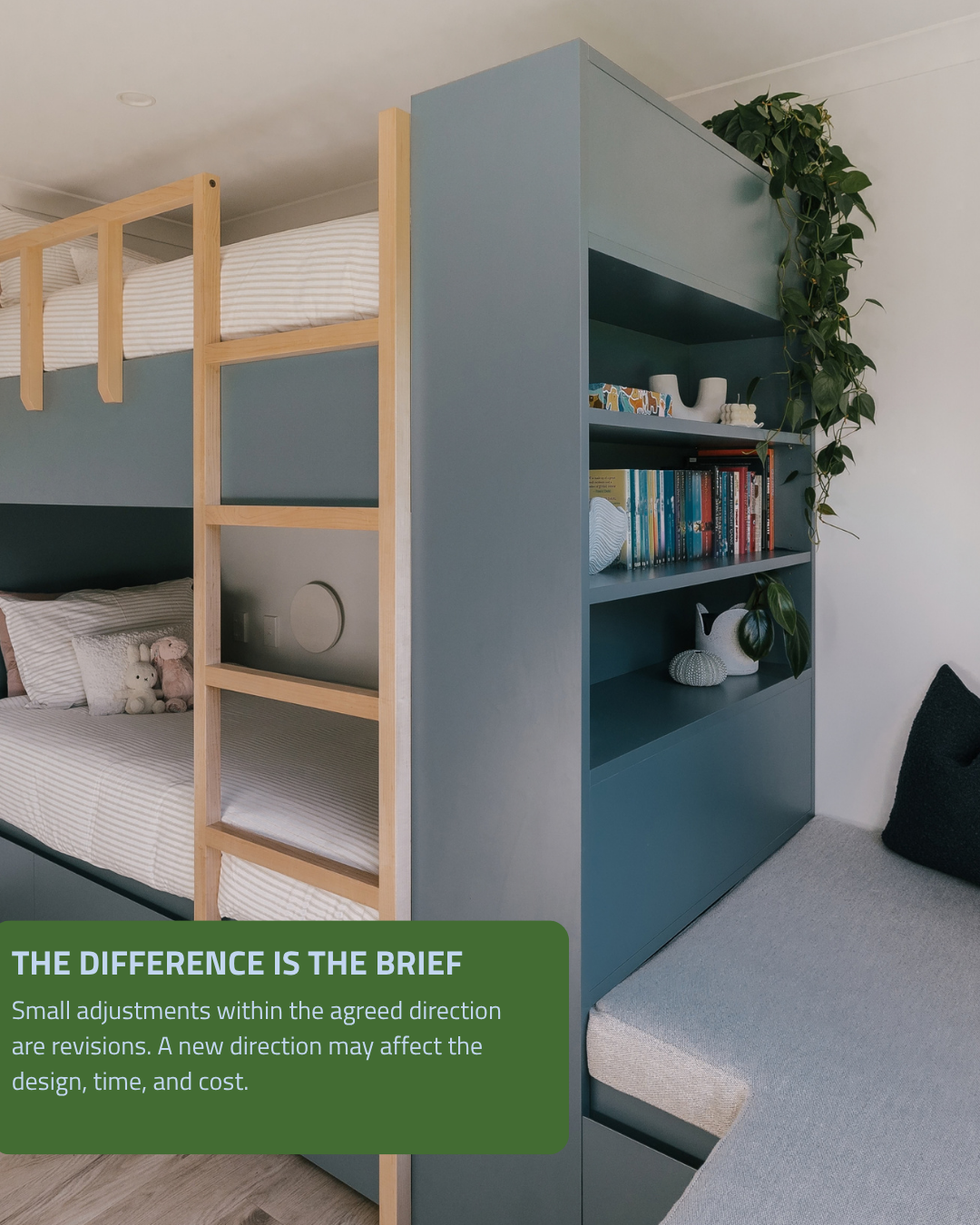
Use the brief as your guide
When you’re unsure, look back at the brief you agreed with your designer. Does the change help the design deliver what you originally discussed? It’s likely a revision. Does it change the look, purpose or overall direction of the project? It may be a scope change.
Talk it through with your designer early. They can explain how the change may affect the design, timeline and fees, so you can decide together how to proceed.
Keep the conversation open
You don’t need to know whether an idea counts as a revision or a scope change before you raise it. Tell your designer what you’d like to change and why. They can help you understand what it involves and whether it fits within the agreed brief.
Clear conversations help you and your designer make thoughtful changes, keep the project on track and stay aligned on the outcome you’re working towards.
